
Several months ago MandE Services & Solutions started supporting a private investor in The Netherlands willing to kick-off production of sporting equipment – padel rackets. First stage of this project was described here: Padel Rackets – Tool Design and Bladder Moulding Consultancy.
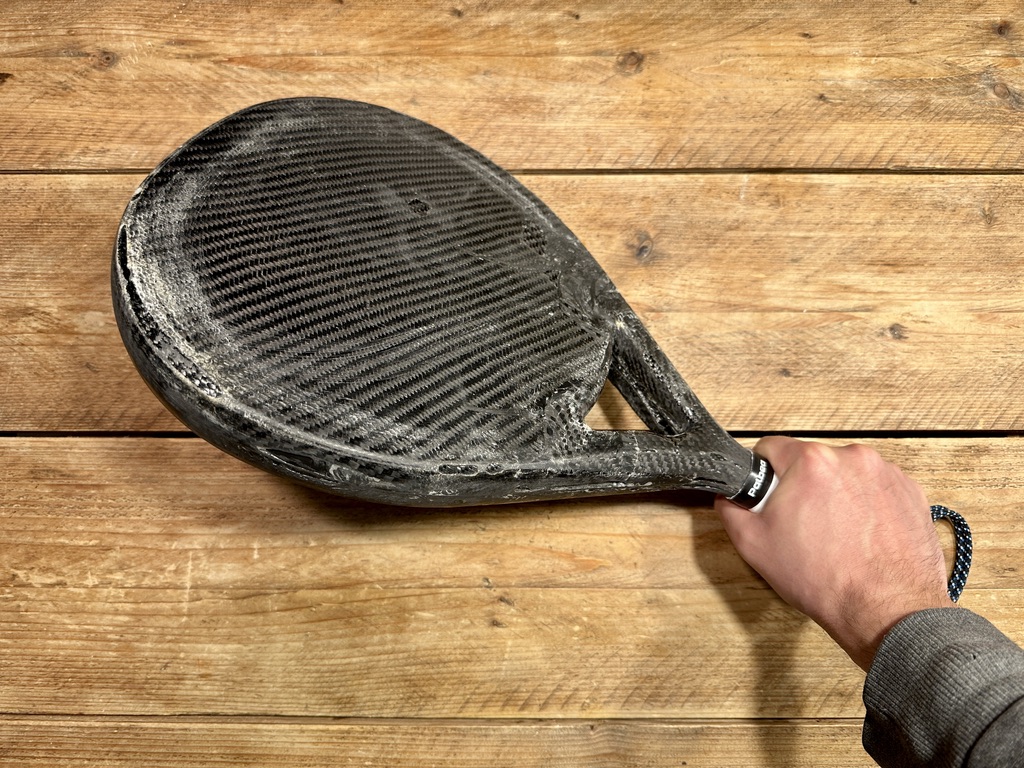
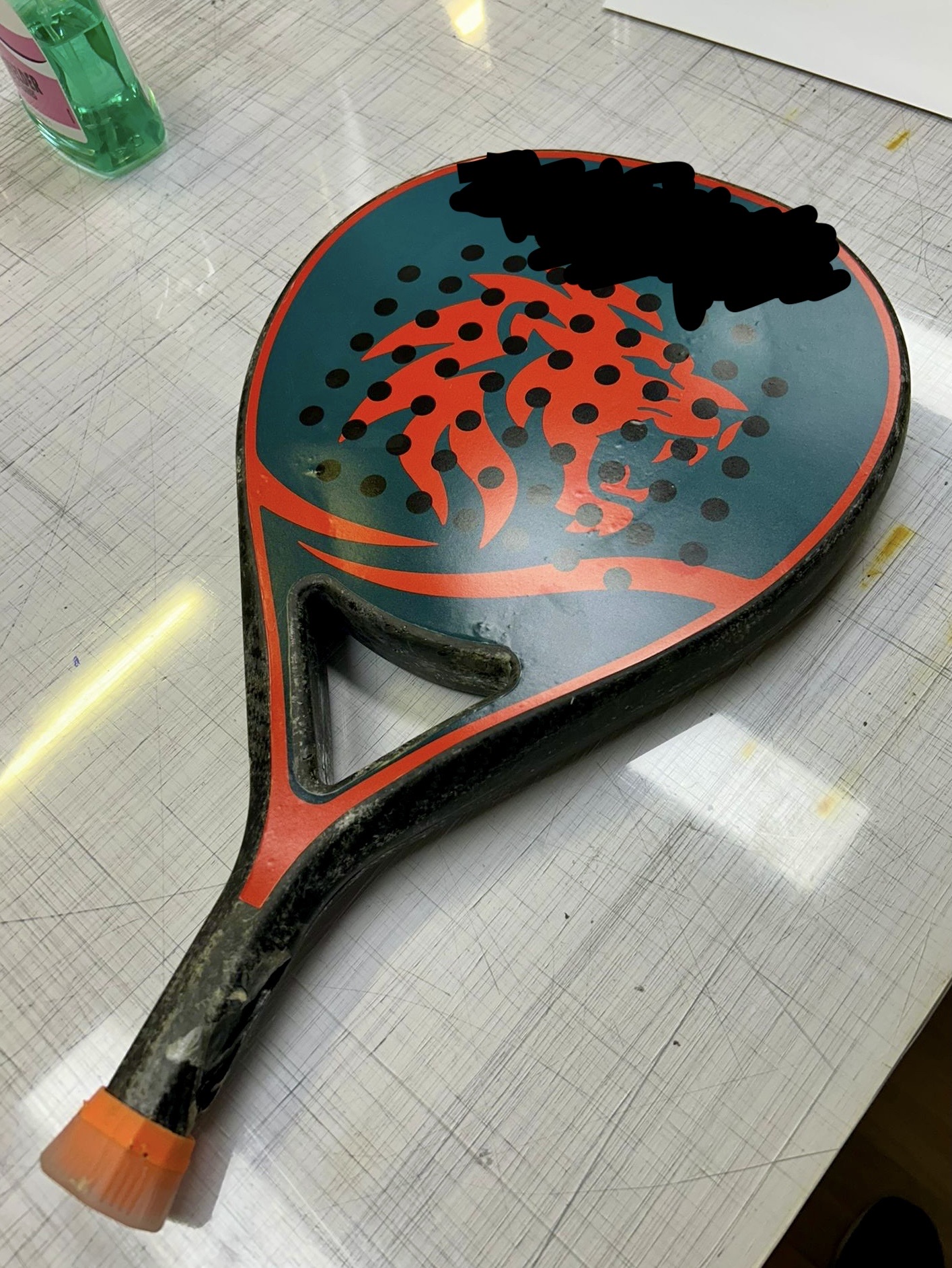
Now that the first composite prototypes have started coming out of the bladder moulding tool, it was time to take the next steps and develop the prototypes of accessories and aesthetic design parts. In this chapter Mande-SNS contributed in the following areas:
- arranging and coordinating cooperation with an industrial designer with Photoshop experience to convert the AI-generated concept provided by the client into a flat vector graphics of aesthetically pleasing racket sticker, matching perfectly the geometry of the composite racket body, and deliver print-house ready artwork files,
- developing a set of handles and bottom plugs, with variety of grip thickness, embedded custom logos and several wrist strap attachment options,
- delivering a set of functional 3D-printed prototypes with off-the-shelf accesories (overgrips, wrist straps) to allow for further assessment of “touch and feel”, size, fit for easy assembly and overall aesthetic design.
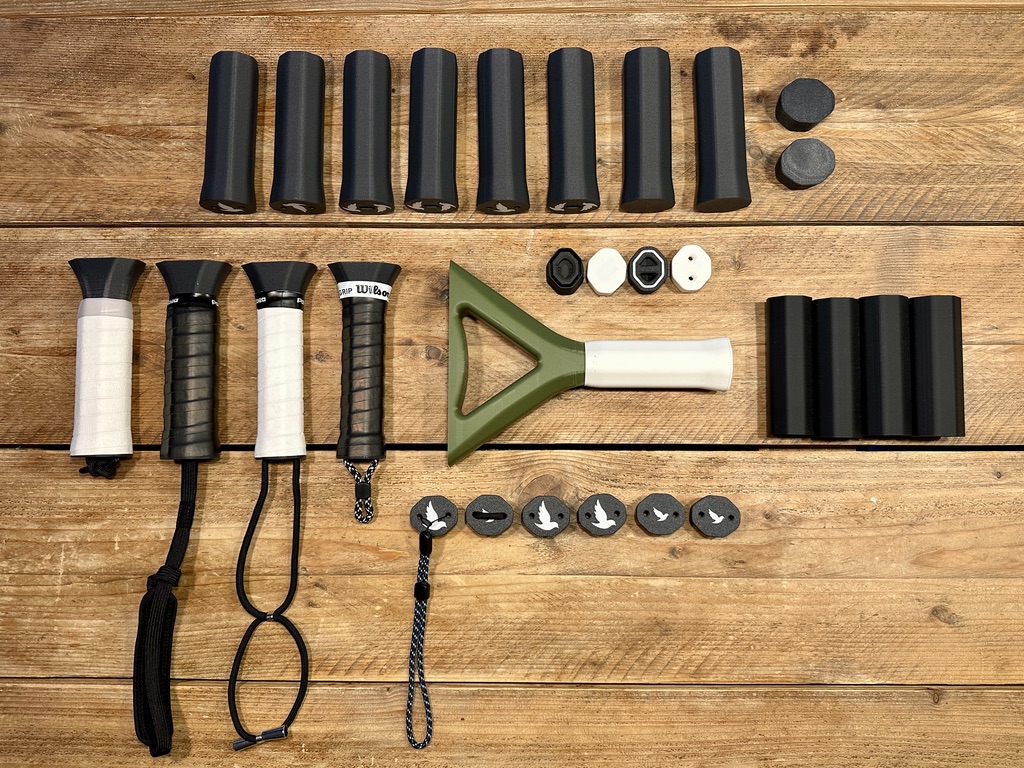
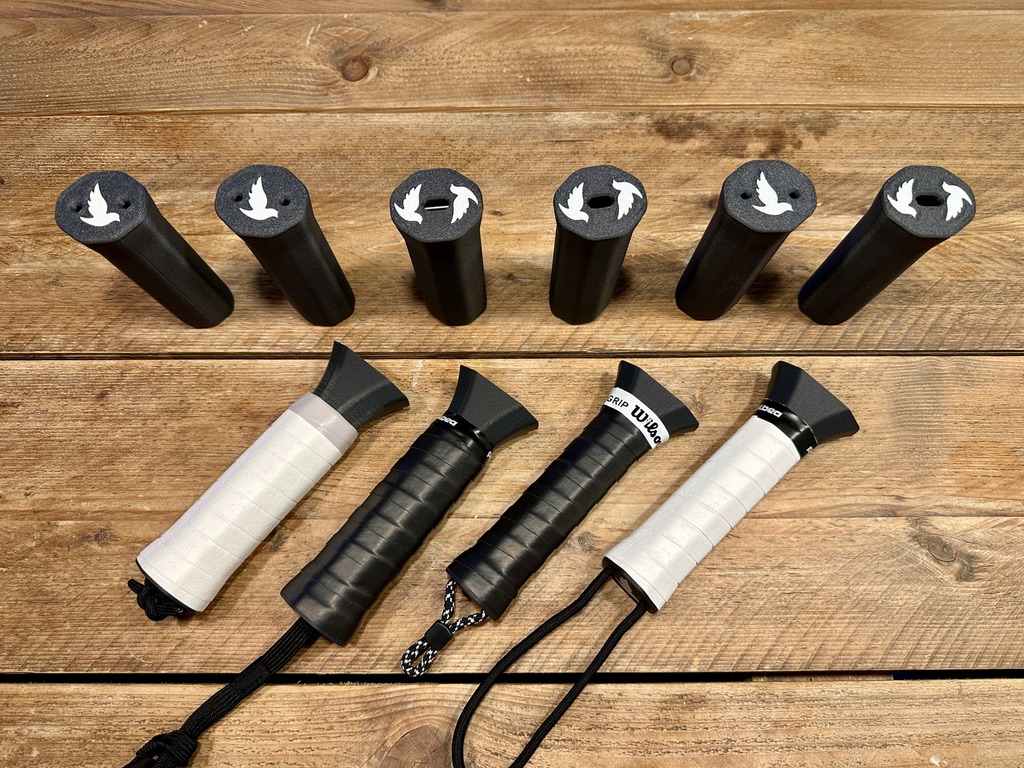
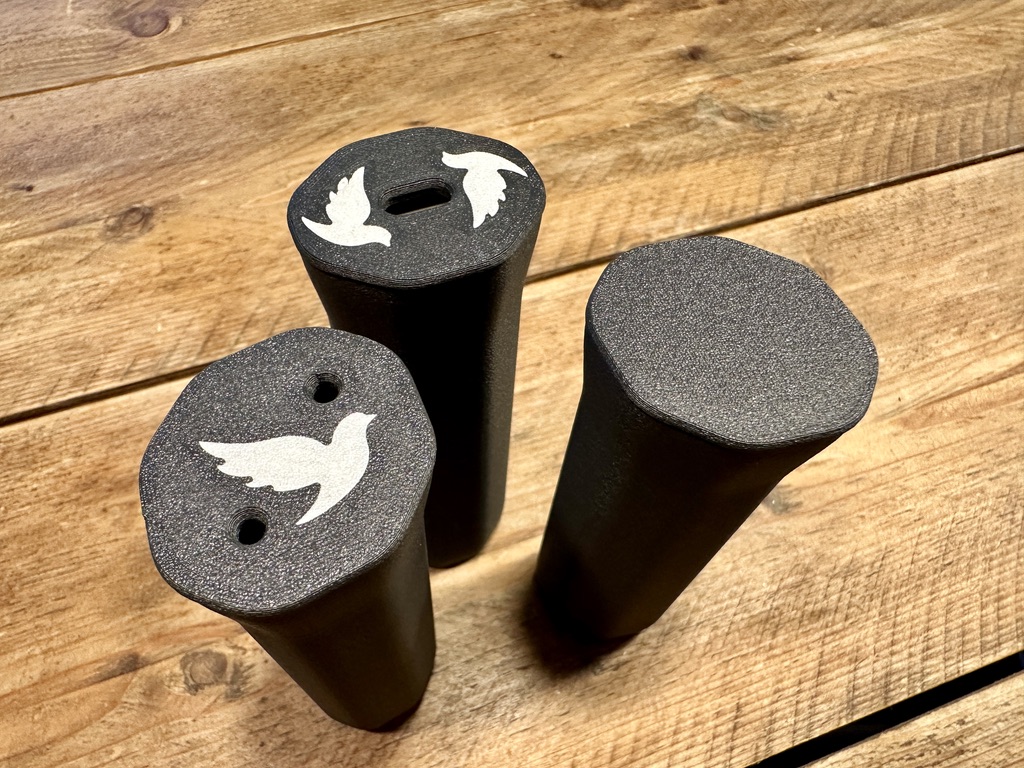
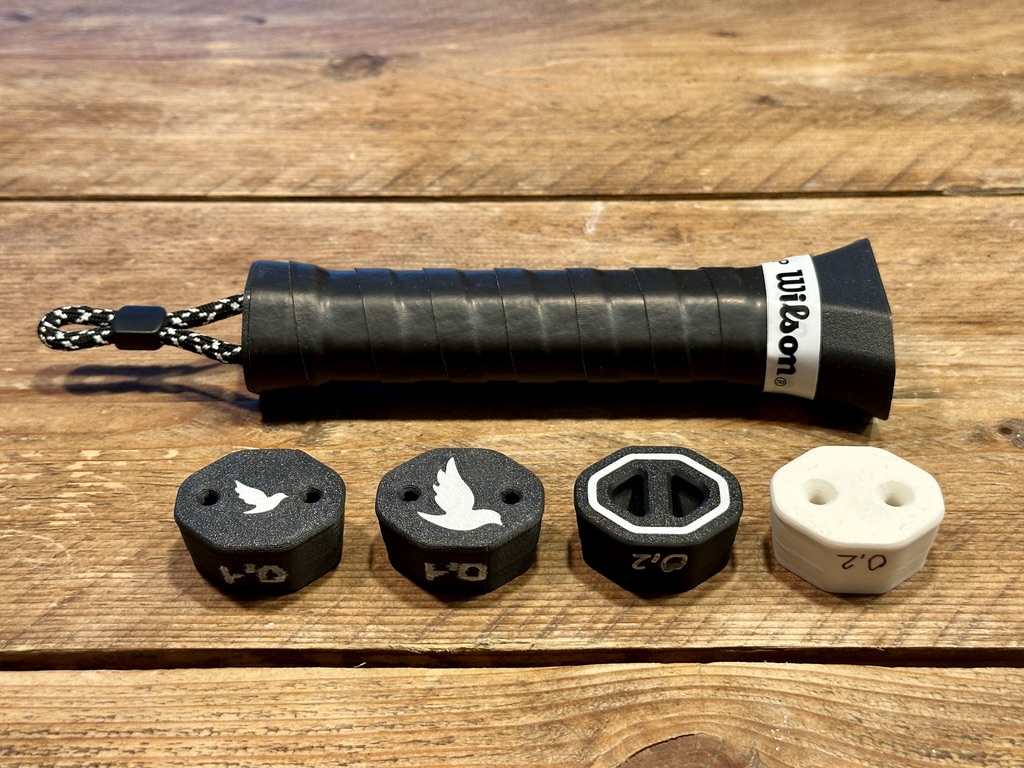
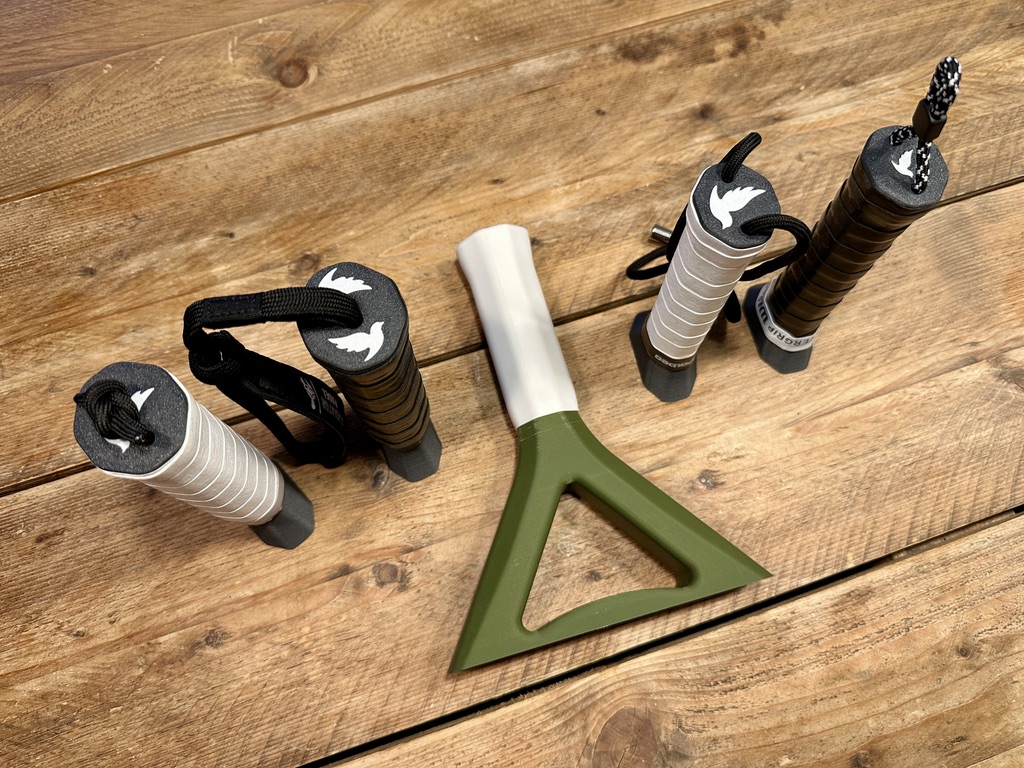
Additive prototyping was carried out with a mid/high-end FDM 3D-printer with multi-material capability, which allowed for embedding some design features (logos) directly in the proto parts – straight from the printer. Usage of textured build plate added a penny to the product-ready aesthetics of these parts. And besides the looks, parts were printed with PETG-CF – a filament with carbon fiber additive to assure strength and durability. For low volume production (up to ~1000 pieces) these parts are product-ready and can be delivered on demand, without any further further investments in tooling.
FDM 3D-printing technologies have evolved significantly in recent years and even low-cost/mid-end printers deliver exceptional high-end quality. With FDM 3D-printing it is still not possible to achieve micrometer precision (dimensional accuracy), but the repeatability is good enough. When combined with careful dimensioning – good enough to get well matching parts, without too much adjustment of slicer settings or iterating the designs. Straight from the printer bed! Check the short video below – with sound!
